 01
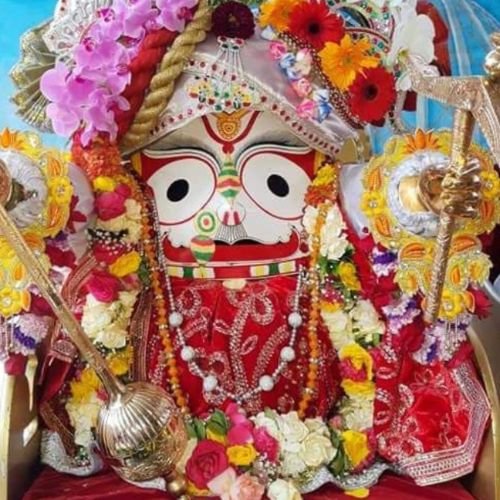
01Sri Baladeva
Krishna's elder brother, accompanying Jagannatha and Subhadra on one of the three chariots.
 Ratha YatraCDMX · ISKCON
ES
Ratha YatraCDMX · ISKCON
ES
Their Lordships
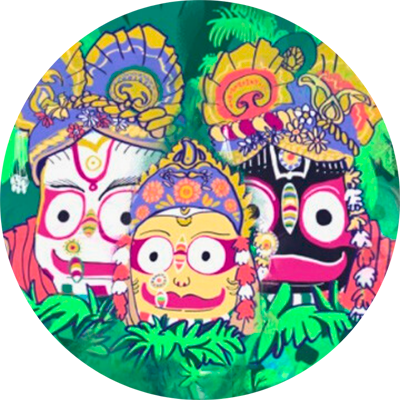
The visual and spiritual heart of Ratha Yatra: Krishna, His elder brother and His sister leave the temple to be seen by everyone.
 01
01Krishna's elder brother, accompanying Jagannatha and Subhadra on one of the three chariots.
 02
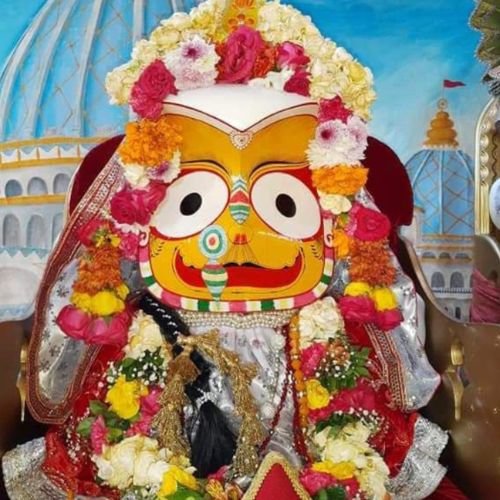
02The sister of Krishna and Baladeva, inseparable from the Ratha Yatra procession.
 03
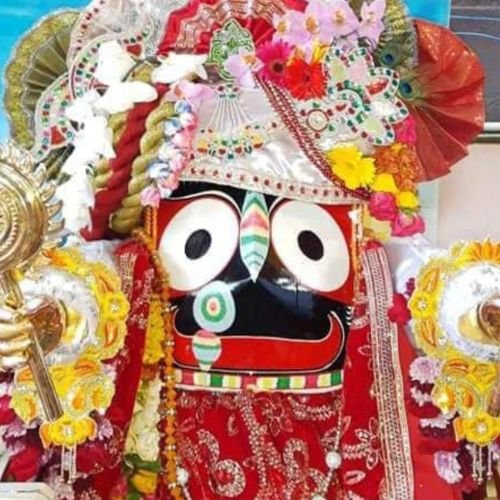
03Krishna in His form as Jagannatha, “Lord of the universe,” meeting the public during the festival.
The supplied institutional document presents King Indradyumna as the king who desired to establish the worship of Krishna, Baladeva and Subhadra in Jagannatha Puri. It recounts that the Deities were carved under a condition of no interruption and that the king opened the door before the work was complete.
The complementary history places the search for Nila Madhava, a form of the Lord worshiped in secret, before Jagannatha's manifestation. Indradyumna's longing to find Him leads the narrative toward Puri and the appearance of the wooden Deities.
Their wide eyes, rounded faces and unconventional anatomical forms make Jagannatha, Baladeva and Subhadra immediately recognizable. Their meaning is not reduced to an interrupted carving: the tradition preserves several accounts expressing the identity, mercy and spiritual emotion of Their forms.
Jagannatha Puri in India is home to the traditional great Ratha Yatra. The temple and chariot route form the historical setting that inspires celebrations around the world.
During Ratha Yatra, the Deities ride on chariots to be seen by all. The procession transforms the streets into a place of kirtan, service and public encounter.